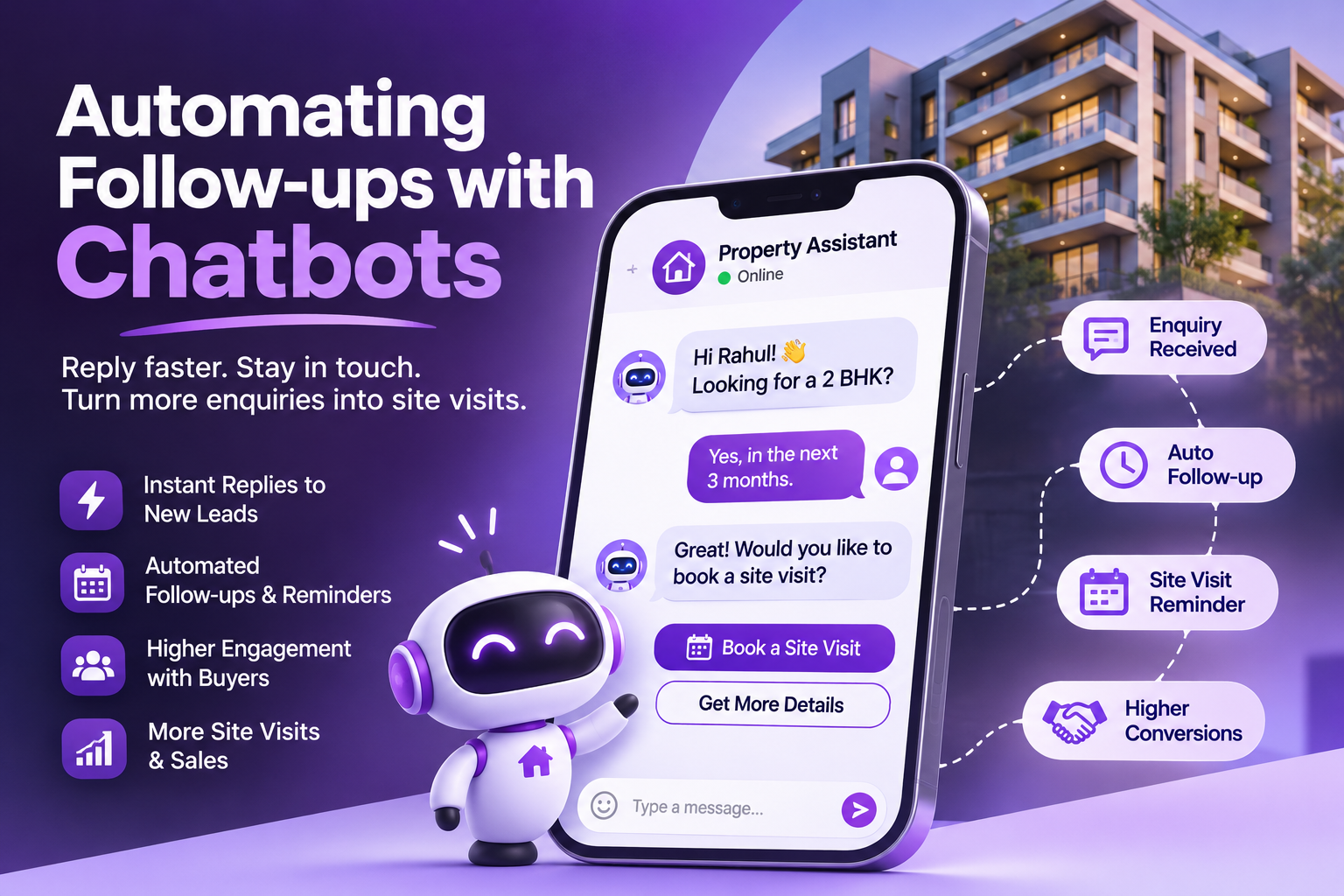
Automating Follow-ups with Chatbots
Imagine this—someone messages you about a 2 BHK on Monday morning. You’re caught up in a site meeting, so you reply two days later. By then, they’ve already scheduled a visit with a different agent. Honestly, that happens all the time, and it eats into your earnings.
Follow-ups help you avoid losing out like that. Doing it all yourself is tough, though. That’s where a chatbot comes in handy. It does most of the heavy lifting, saving you time. So, let’s dig into how it actually works and how to set one up.
Why Bother With Follow-ups?
Buyers rarely make snap decisions. They browse tons of listings, talk things over with family, and compare loan options. Sometimes that drags on for weeks. The agent who keeps the conversation going is usually the one who lands the deal.
Quick replies matter. If you answer in a minute, buyers know you’re invested. Wait two days, and you look uninterested. A lot of leads just pick whoever responds first.
And if your lead list gets big, it’s a mess to track everything by hand. One agent can juggle twenty leads. Two hundred? No way. You’ll lose names, mix up notes—stuff just slips through. A chatbot doesn’t forget. It doesn’t tire out, and it’s awake at 2 AM on a Sunday.
How Chatbots Handle Follow-ups
You set things up once, and after that, the bot takes care of the rest. When someone fills out a form, clicks an ad, or sends a message, it jumps in and starts a conversation. It asks for the basics—stuff like budget, area, and when they want to move in—and then logs those answers.
Then, the bot keeps an eye on things and follows up depending on what the lead does next. If someone browses listings but skips scheduling a visit, the bot sends a friendly reminder. If they book a tour, it sends them a heads-up. And if they go silent, the bot checks in again after a few days.
The smart bots know when they’re out of their depth. If someone writes, “Can I see it tomorrow?” the bot instantly alerts your agent so a real person can step in for the big decisions. The bot sticks to the basic stuff and leaves the deal-making to humans.
A lot of real estate teams count on these chatbots now. They run right where people are—on websites, WhatsApp, Instagram, and Facebook—so leads get fast replies on the apps they already use every day.
Types of Follow-ups
Not every lead needs the same message. Here are the ones that work best.
Follow-up Type | When It Goes Out | Why It Helps |
Instant reply | Seconds after an enquiry | Catches the lead while interest is high |
Visit reminder | 24 hours and 2 hours before | Cuts down no-shows |
Post-visit check-in | Same day as the visit | Gets feedback and clears doubts |
Price or offer update | When a deal changes | Brings cold leads back |
New listing alert | When a matching home appears | Keeps your name fresh |
Re-engagement | After 7 to 14 quiet days | Wakes up silent leads |
Setting It Up Step by Step
Honestly, it’s simpler than you think. Just follow these steps.
First, pick one goal. Want more people visiting your site? Looking for quicker replies? Start with one thing and nail it down.
Next, map out the lead journey. List every step from the first message all the way to a signed deal. Pay attention to spots where leads usually disappear.
Then, draft your messages. Write a short, clear note for every stage. Say them out loud—if anything sounds awkward, tweak it.
Figure out your timing. Aim to reply to new leads in less than a minute. For follow-ups, give it a couple of days before nudging again.
Now, connect your tools. Hook the bot up to your CRM and calendar, so all your lead info stays in one place.
Add a human touch. Warm leads should get handed off to a real agent quickly.
Don’t forget to test it yourself. Message the bot from your own phone. You’ll catch any weird or broken replies fast.
And you’re not on your own here. Real estate marketing agencies can build these flows, write all the messages, and run tests for you. Lots of developers bring in marketing teams to keep their bots running smoothly. That means your sales team can spend more time chatting with buyers and closing deals.
Talk Like a Human
Nobody wants to talk to a robot. Make your bot sound like that helpful coworker everyone likes. Use people’s names. Keep messages snappy. Ask just one thing at a time.
Here are a few easy ways to do it:
- Start with a quick hello, not a speech.
- Say “visit” instead of “site inspection.”
- Offer simple choices: “Tomorrow at 11 AM or 4 PM?”
- Share a photo or a map link when it helps.
- Always let people know they can talk to a real person if they want.
Here’s an example that works: “Hi Rahul, did you like the 2 BHK we showed you? Want to see it this weekend?” It’s short, friendly, and you can answer in one word.
What to Avoid?
A poorly set up bot can damage your reputation. Watch out for these mistakes:
- Too many messages. A text every day feels like spam. Give people some space.
- Copy-paste style. If everyone gets the same message, it comes off as fake. Use their name, mention their area, and reference their budget.
- No way to unsubscribe. Let people stop the messages whenever they want. It builds trust.
- Bad timing. Don’t text at midnight—stick to regular hours.
- No backup plan. If the bot gets stuck, make sure it hands the chat to your team.
Track What Works
You can’t fix what you don’t measure. Check your numbers once a week. A few simple ones tell you most of the story.
Metric | What It Tells You | Good Sign |
Response time | How fast leads hear back | Under one minute |
Reply rate | How many leads answer the bot | Rising each month |
Visit booking rate | How many chats become visits | Steady growth |
Drop-off point | Where leads stop replying | Fewer drops over time |
Cost per lead | Money spent per lead | Going down |
Say a message gets few replies. Change a few words and test it again. Small tweaks often make a big difference.
Wrapping Up
Follow-ups are what close deals, but doing them all manually just isn’t practical. A chatbot keeps things moving fast and lets you stay in touch without draining your time. That means you get more chances for actual conversations with buyers.
Don’t try to overhaul everything at once. Just pick one follow-up to automate—like sending that first instant reply. Get comfortable with it, then layer in more steps as you go. With a good process, real estate marketing chatbots turn more inquiries into actual visits and sales. Remember, keep your messages friendly, track what’s working, and always have a real person ready to jump in if needed. Your leads will notice the attention, and your team will score more wins.