
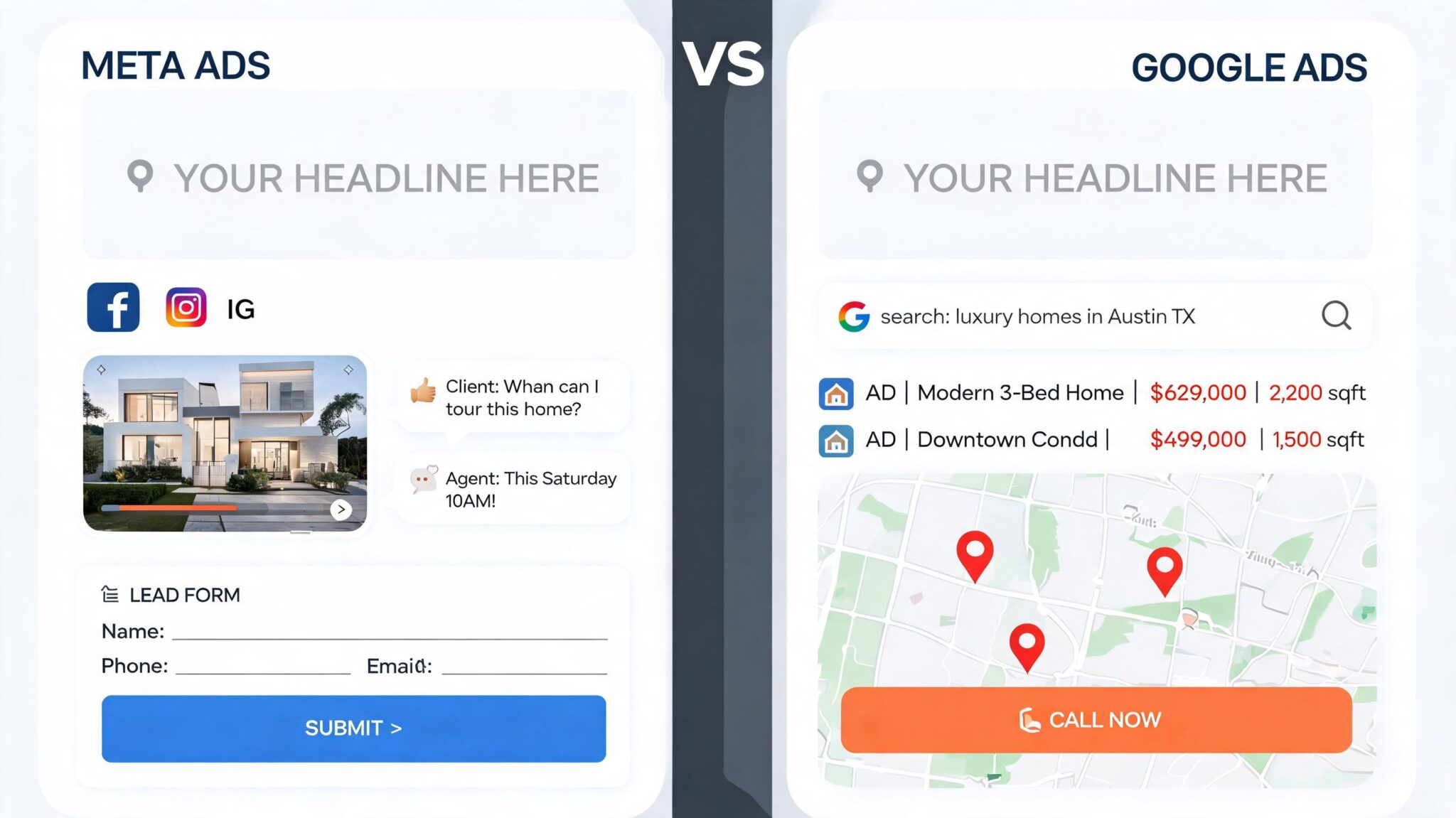
Meta Ads vs Google Ads for Real Estate - Which Generates Better Leads?
Picture two buyers on a random Tuesday night. One is scrolling through Instagram, half-watching a home tour video that just popped up between a friend’s dinner photo and a meme. The other is sitting at their laptop, typing “3 bedroom homes for sale near me” into Google, ready to click the first good result. Both of these people could become your next client, but they need very different ads to get there. That’s the real question behind Meta Ads vs Google Ads: it’s not about which platform is better, but which one matches the way your buyer thinks and searches.
For any real estate marketing agency trying to stretch a budget and bring in real leads, understanding this difference changes everything.
How Meta Ads and Google Ads Actually Work
Meta Ads live inside Facebook and Instagram, and they show up while someone is simply scrolling for fun. Nobody opened the app looking for a house, so the ad has to grab attention and spark curiosity on its own, using a strong photo, a short video, or a catchy offer.
Google Ads work in the opposite direction, since they appear only when someone types a search like “homes for sale in Mumbai” or “best real estate agent near me.” That person already has a need, and they typed those exact words because they’re ready to act, which means Google meets them at the perfect moment instead of interrupting their day.
This one difference, timing, shapes almost everything else about how each platform performs. Meta builds interest before a person even starts house hunting, while Google shows up right when the hunt is already underway.
Lead Quality: Which Platform Wins?
Lead quality comes down to one simple thing: how close is this person to actually buying or selling? A high quality lead has a budget, a timeline, and real intent behind their click, while a low quality lead might just be browsing out of curiosity.
Because Google Ads target people who are already searching with intent, they tend to produce leads that are easier to close, though those clicks usually cost more. Someone typing “homes for sale with a pool” isn’t killing time; they want a home, and soon.
Meta Ads work a little differently, since most people clicking your ad weren’t planning to look at homes that day. Some of these leads warm up over weeks, once they see your listings a few more times and start to trust your name. Meta leads usually cost less upfront, but they need more nurturing before they turn into real conversations.
|
Factor |
Meta Ads |
Google Ads |
|
Lead intent |
Lower at first, warms up over time |
High right away |
|
Cost per lead |
Usually lower |
Usually higher |
|
Follow-up needed |
More, since trust takes time |
Less, since intent is already there |
|
Best for |
Brand building, staying top of mind |
Fast, direct response leads |
Comparing the Real Cost of Each Platform
Budget matters to almost every real estate marketing agency, and Google Ads can get expensive fast in competitive cities. Some real estate keywords cost 300rs or more per click, which eats through a small budget in just a few days.
Meta Ads generally cost less per click, and even a modest daily budget can put your ad in front of thousands of local people. That makes Meta a smart starting point for agents testing a new market or working with limited funds.
Still, a cheap lead isn’t automatically a good lead. You might collect plenty of form submissions on Meta, only to find that few of them ever pick up the phone. On Google, you may see fewer leads overall, but more of the people who reach out are ready to have a real conversation about buying or selling.
Targeting: Reaching the Right People
Meta Ads give you deep targeting options, letting you filter by age, income, location, and even specific interests like home renovation or moving. You can also build a lookalike audience from your past clients, which helps Meta find new people who resemble the buyers and sellers you’ve already worked with.
Google Ads take a different approach, targeting based on the exact words someone types into the search bar. You choose the keywords tied to your listings and your service area, so your ad only shows to people actively searching in your market.
Both platforms also let you retarget visitors who came to your website but left without filling out a form. That second or third impression often makes the difference, and retargeting tends to work well no matter which platform you’re running it on.
So, Which Platform Should You Actually Choose?
Honestly, it depends on what you need right now. If you want leads from people who are ready to buy or sell today, lean into Google Ads. If you’re building your name in a new area and want to stay visible over time, Meta Ads will likely serve you better.
Plenty of successful agents don’t pick just one; they run both at the same time. Google catches the buyers who are ready right now, while Meta keeps the agent’s face and listings in front of past clients, referrals, and future buyers who aren’t quite ready yet. Together, the two platforms often outperform either one running alone.
Working with an experienced marketing agency for real estate can save you from a lot of trial and error here. A good agency knows how to split your budget, test creative, and read the data so you’re not guessing where your leads come from.
Quick Tips to Get More Out of Both Platforms
Use clear, well-lit photos and short videos for every listing.
- Write headlines that state the benefit in the first few words.
- Send clicks to a landing page built for that specific ad, not your homepage.
- Track every lead’s source, so you know exactly what’s working.
- Start with a small budget, then put more money behind what performs.
- Follow up within minutes, since real estate leads cool off fast.
Final Thoughts
Neither platform beats the other in every situation, and that’s the honest answer. Meta Ads help you reach people early and build trust before they even start looking. Google Ads help you catch people the moment they’re ready to act. The right choice comes down to your market, your budget, and how quickly you need results.
If you’re still unsure where to put your next ad dollar, talk to a trusted real estate marketing agency. They can run both platforms side by side, show you the real numbers, and help you spend with confidence, turning ad clicks into actual clients instead of just data points.
