
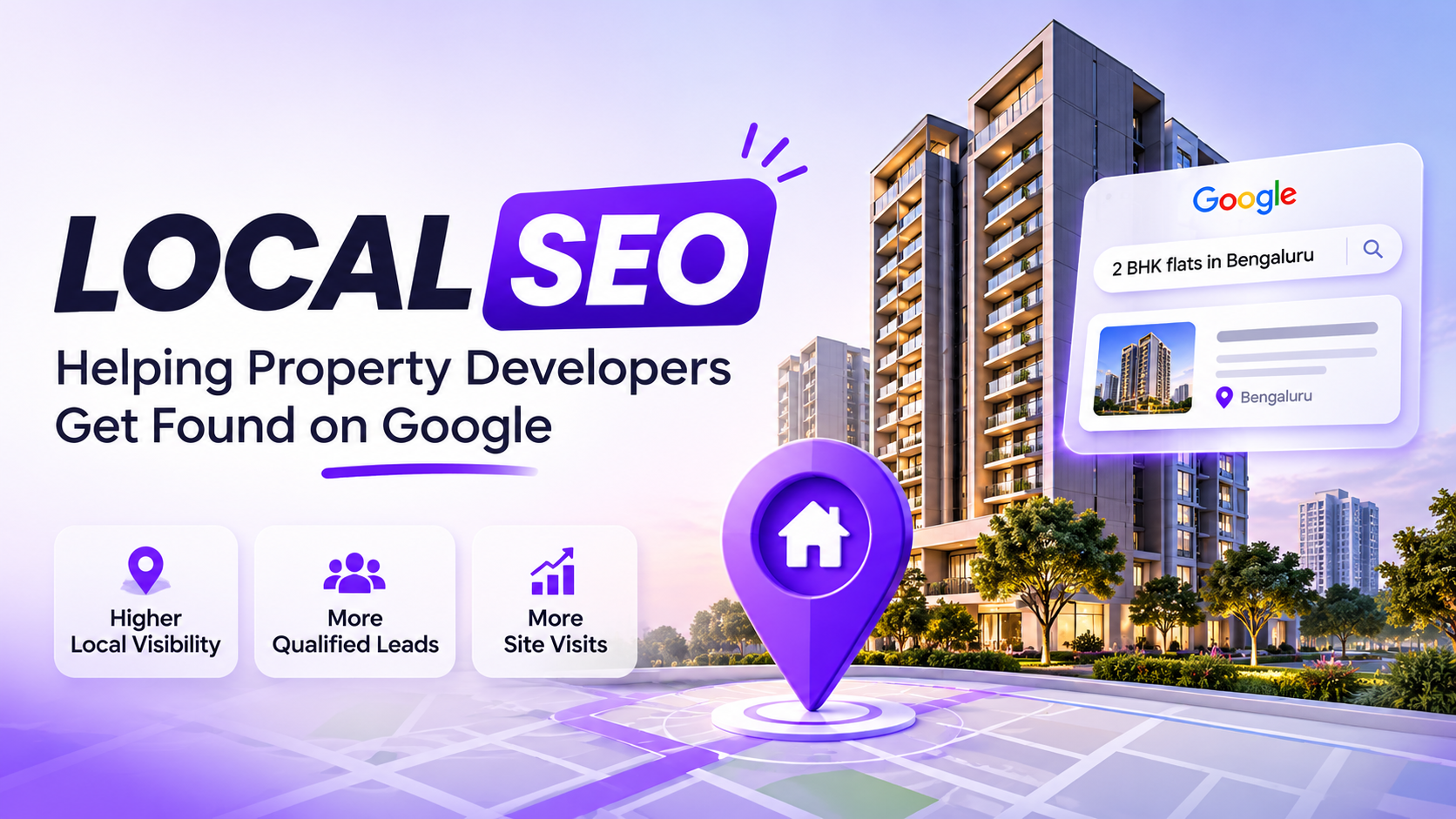
Local SEO for Property Developers Most home buyers begin their search on a phone. They type words like “new flats near me” or “2 BHK in Bengaluru.” If your project does not appear in those results, you lose a lead before the first call. Local SEO helps you fix that. This guide shows property developers how to use it, step by step. What Is Local SEO for Property Developers? Local SEO helps your website and business listings rank for searches in a specific area. For developers, this means showing up when people look for homes near your project. Google looks at three things: how close you are, how well you match the search, and how much it trusts you. You can improve all three with simple steps. Good local SEO real estate work puts your project in front of buyers who live nearby or plan to move there. Why Local SEO Matters for Developers Property is a local product. A buyer cannot move your tower to another city. So most people search by area, price, and home size. These searches also show strong intent. Someone who types “ready to move flats in Mumbai” often plans to visit soon. Paid ads can bring leads too, but they stop when your budget ends. Local SEO keeps working month after month. Here is what you gain: More site visits from buyers who live close by A lower cost for each lead over time Higher trust, because people see your project on Google Maps More calls straight from your listing Set Up Your Google Business Profile Your Google Business Profile is the most useful free tool you have. It controls how your project looks on Google Search and Maps. Create one profile for each sales office or project site. Use your real address, phone number, and opening hours. Choose the right category, such as “Real estate developer.” Then add clear photos of the site, show flat, and amenities. Upload floor plans and short walkthrough videos as well. Post updates about new phases, offers, or open house days. Answer questions in the Q&A section quickly. Active profiles earn more clicks than empty ones. Build Strong Location Pages Every project needs its own page on your website. Do not squeeze all projects onto one page. A separate page lets Google match each project to local searches. Start with the project name and the area in the heading. Describe the home types, sizes, and price range in plain words. Then explain the neighborhood. Mention schools, hospitals, train stations, markets, and main roads, along with travel times. Buyers care about daily life, not only floor area. Add a map, a gallery, and a simple enquiry form. Keep your name, address, and phone number the same as on your Google profile. Small mismatches confuse search engines. Use the Right Local Keywords Local keywords combine a home type with a place. They match how real buyers talk. Use them in page titles, headings, image names, and body text. Do not stuff them. Write for people first. Keyword Type Example Area + home type 2 BHK flats in Borivali West Near a landmark apartments near Andheri station Status based ready to move homes in Vasai-Virar Budget based flats under 60 lakh in Vasai Developer + area new launch by [your brand] in Goregaon Check what buyers type by using Google’s search suggestions. Also read the “People also ask” box. These tools show real questions you can answer on your pages. Collect and Manage Reviews Reviews shape trust more than any ad. Buyers read them before they call. Ask happy customers to leave a review after possession or a smooth site visit. Send them a short link to your Google profile to make it easy. Reply to every review, good or bad. Thank people for kind words. For complaints, stay calm, say sorry, and offer to fix the issue offline. Future buyers watch how you respond. Never buy fake reviews. Google can remove them and may punish your listing. Build Local Citations and Links A citation is any online mention of your name, address, and phone number. Property portals, local directories, and business listing sites all count. List your projects on trusted sites and keep the details identical everywhere. Links from local websites also help. Try these ideas: Sponsor a local sports event or school program Share news about new jobs or roads that affect your area Ask local news sites to cover your project launch Partner with nearby shops and service providers Each link tells Google that your business is real and active in the area. Make Your Website Fast and Mobile Friendly Most property searches happen on phones. A slow site drives buyers away within seconds. Compress large images and videos. Use a simple layout with big buttons for “Call Now” and “Book a Visit.” Test your pages on a mid-range phone with a normal network. If a page feels slow to you, it feels slow to buyers. Track Your Results Good SEO needs regular checks. Look at a few numbers each month and adjust your plan. What to Track Why It Matters Google Business Profile calls and clicks Shows direct buyer interest Rankings for local keywords Shows if your pages are moving up Website visits from local areas Shows if the right people find you Enquiry forms and site visit bookings Shows real lead value Review count and rating Shows trust growth When to Hire an Expert Local SEO takes time and steady effort. Many developers prefer to hand it to a real estate marketing agency. A good marketing agency for real estate already knows how buyers search. It also knows which portals matter and how to write pages that convert. Ask a few questions before you hire. Does the team have real estate case studies? Will they share monthly reports? Do they explain their work in simple words? Avoid anyone who promises first place on Google in a week. Real results come with steady work over three
Automating Follow-ups with Chatbots
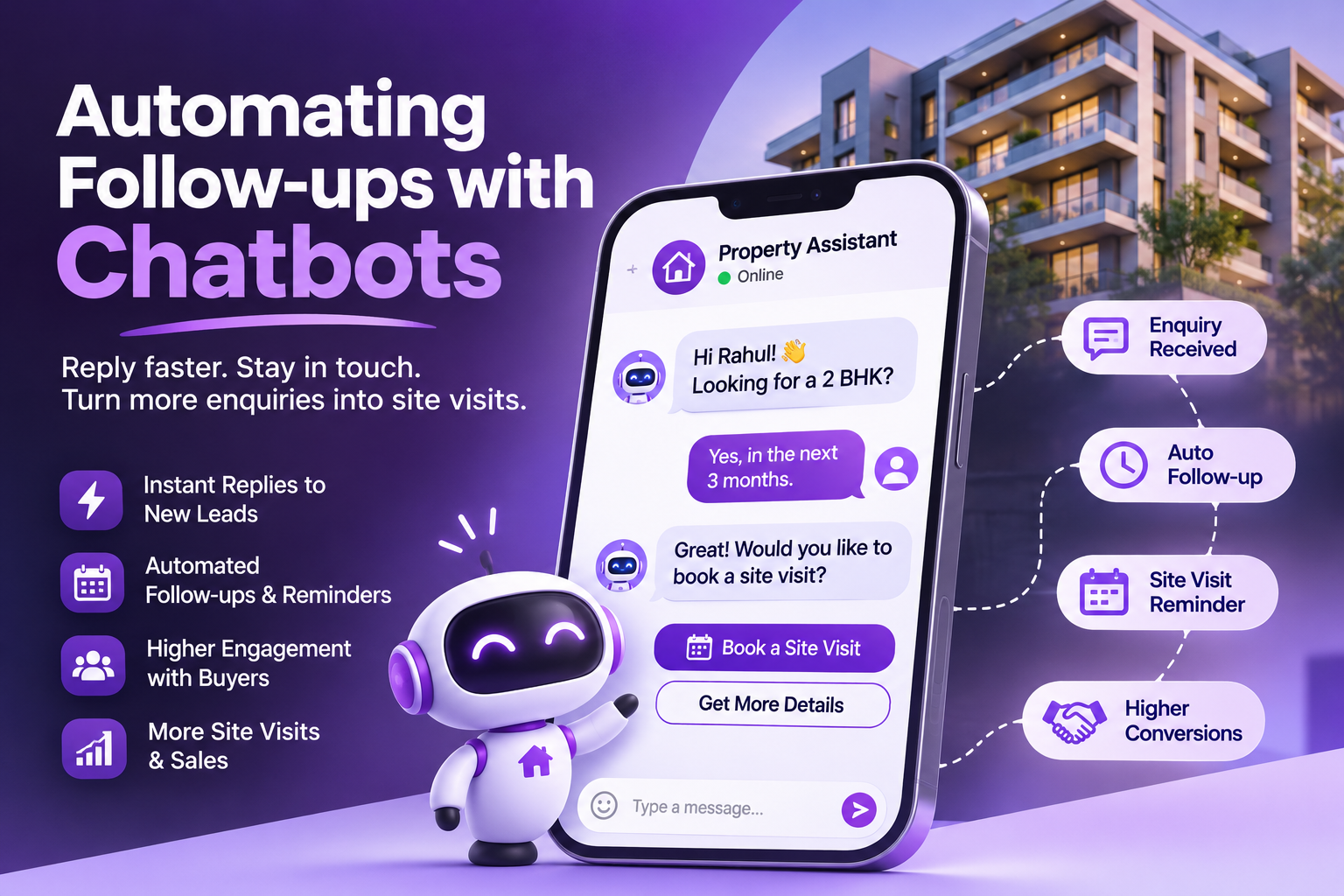
Automating Follow-ups with Chatbots Imagine this—someone messages you about a 2 BHK on Monday morning. You’re caught up in a site meeting, so you reply two days later. By then, they’ve already scheduled a visit with a different agent. Honestly, that happens all the time, and it eats into your earnings. Follow-ups help you avoid losing out like that. Doing it all yourself is tough, though. That’s where a chatbot comes in handy. It does most of the heavy lifting, saving you time. So, let’s dig into how it actually works and how to set one up. Why Bother With Follow-ups? Buyers rarely make snap decisions. They browse tons of listings, talk things over with family, and compare loan options. Sometimes that drags on for weeks. The agent who keeps the conversation going is usually the one who lands the deal. Quick replies matter. If you answer in a minute, buyers know you’re invested. Wait two days, and you look uninterested. A lot of leads just pick whoever responds first. And if your lead list gets big, it’s a mess to track everything by hand. One agent can juggle twenty leads. Two hundred? No way. You’ll lose names, mix up notes—stuff just slips through. A chatbot doesn’t forget. It doesn’t tire out, and it’s awake at 2 AM on a Sunday. How Chatbots Handle Follow-ups You set things up once, and after that, the bot takes care of the rest. When someone fills out a form, clicks an ad, or sends a message, it jumps in and starts a conversation. It asks for the basics—stuff like budget, area, and when they want to move in—and then logs those answers. Then, the bot keeps an eye on things and follows up depending on what the lead does next. If someone browses listings but skips scheduling a visit, the bot sends a friendly reminder. If they book a tour, it sends them a heads-up. And if they go silent, the bot checks in again after a few days. The smart bots know when they’re out of their depth. If someone writes, “Can I see it tomorrow?” the bot instantly alerts your agent so a real person can step in for the big decisions. The bot sticks to the basic stuff and leaves the deal-making to humans. A lot of real estate teams count on these chatbots now. They run right where people are—on websites, WhatsApp, Instagram, and Facebook—so leads get fast replies on the apps they already use every day. Types of Follow-ups Not every lead needs the same message. Here are the ones that work best. Follow-up Type When It Goes Out Why It Helps Instant reply Seconds after an enquiry Catches the lead while interest is high Visit reminder 24 hours and 2 hours before Cuts down no-shows Post-visit check-in Same day as the visit Gets feedback and clears doubts Price or offer update When a deal changes Brings cold leads back New listing alert When a matching home appears Keeps your name fresh Re-engagement After 7 to 14 quiet days Wakes up silent leads Setting It Up Step by Step Honestly, it’s simpler than you think. Just follow these steps. First, pick one goal. Want more people visiting your site? Looking for quicker replies? Start with one thing and nail it down. Next, map out the lead journey. List every step from the first message all the way to a signed deal. Pay attention to spots where leads usually disappear. Then, draft your messages. Write a short, clear note for every stage. Say them out loud—if anything sounds awkward, tweak it. Figure out your timing. Aim to reply to new leads in less than a minute. For follow-ups, give it a couple of days before nudging again. Now, connect your tools. Hook the bot up to your CRM and calendar, so all your lead info stays in one place. Add a human touch. Warm leads should get handed off to a real agent quickly. Don’t forget to test it yourself. Message the bot from your own phone. You’ll catch any weird or broken replies fast. And you’re not on your own here. Real estate marketing agencies can build these flows, write all the messages, and run tests for you. Lots of developers bring in marketing teams to keep their bots running smoothly. That means your sales team can spend more time chatting with buyers and closing deals. Talk Like a Human Nobody wants to talk to a robot. Make your bot sound like that helpful coworker everyone likes. Use people’s names. Keep messages snappy. Ask just one thing at a time. Here are a few easy ways to do it: Start with a quick hello, not a speech. Say “visit” instead of “site inspection.” Offer simple choices: “Tomorrow at 11 AM or 4 PM?” Share a photo or a map link when it helps. Always let people know they can talk to a real person if they want. Here’s an example that works: “Hi Rahul, did you like the 2 BHK we showed you? Want to see it this weekend?” It’s short, friendly, and you can answer in one word. What to Avoid? A poorly set up bot can damage your reputation. Watch out for these mistakes: Too many messages. A text every day feels like spam. Give people some space. Copy-paste style. If everyone gets the same message, it comes off as fake. Use their name, mention their area, and reference their budget. No way to unsubscribe. Let people stop the messages whenever they want. It builds trust. Bad timing. Don’t text at midnight—stick to regular hours. No backup plan. If the bot gets stuck, make sure it hands the chat to your team. Track What Works You can’t fix what you don’t measure. Check your numbers once a week. A few simple ones tell you most of the story. Metric What It Tells You Good Sign Response time How fast leads hear back Under one minute

Building Trust with Real Estate Testimonials
Building Trust with Real Estate Testimonials Buying or selling a home is one of the biggest choices in a person’s life. It involves large sums of money and strong feelings. Before anyone signs a deal, they want to feel safe. Your own words rarely remove that doubt, but the words of happy clients often do. This post explains why testimonials matter, how to collect them, and how to use them well. Why Trust Matters So Much in Real Estate Buying a property is nothing like buying a phone. One wrong move can cost lakhs or even crores. Buyers know this, so they check every detail twice before they decide. They read online reviews, ask friends, and compare several agents or builders. Most people trust other buyers more than they trust any advertisement. A glossy brochure may look nice, but it proves very little. A real story from a real family proves a lot. When a stranger says your team kept every promise, new clients relax. They stop asking whether you are honest and start asking when they can visit the site. Trust also shortens the sales cycle and brings you better leads. What Makes a Strong Testimonial Not every review helps your brand. A line like “Great service, thanks” says almost nothing. A strong testimonial tells a small story with a clear start and a happy end. It shows the problem, the help you gave, and the result. Look for these parts in a good testimonial: A real name and photo. Faces and names make a review feel honest. A clear problem. For example, “We were afraid of hidden costs.” A specific result. For example, “We sold our flat in three weeks.” A personal touch. Clients should mention how your team made them feel. Details of the deal. Mention the city, the property type, or the project name. Specific details prove that a real person wrote the words. Readers can spot vague praise within seconds, and they skip it. How to Collect Testimonials the Right Way Many agents wait for clients to send praise on their own. That rarely happens. Most happy clients forget to write anything unless you ask. The best time to ask is right after a good moment, such as the key handover or the final signing. Clients feel excited then, and the memory is fresh. Keep the process easy. Send a short message with two or three simple questions. You can ask what worried them at the start. You can ask what they liked about working with you. You can also ask whether they would suggest you to a friend. Offer more than one way to reply. Some people like to type, while others prefer a quick phone call or a short video. Always ask for permission before you share their words, name, or photo. Clear consent protects your brand and respects your client. Where to Share Your Testimonials Great reviews are useless if nobody sees them. Place them where buyers spend their time and make decisions. The table below shows the best spots and what each one does. Place Why it works Home page Visitors see proof within seconds of landing Property pages Reviews sit next to the listing and ease last-minute doubts Google Business Profile Local buyers check this first when they search Social media Short clips and quote cards reach many people fast Email campaigns A single story can warm up a cold lead Sales brochures Printed quotes help during in-person meetings Do not hide your reviews on a lonely “Testimonials” page. Spread them across your site and channels. A buyer should meet social proof at every step of the journey. Video Testimonials vs Written Testimonials Both formats work, but they serve different goals. Written reviews are quick to read and easy to place on any page. They also help your search ranking, since they add fresh words to your site. Video reviews feel more personal. Viewers can see the smile, hear the voice, and sense that the praise is real. A one-minute clip of a family holding their new keys can move people more than a page of text. Videos also do well on social media. A smart plan uses both. Start with a written review, then ask your happiest clients to record a short video. Keep each clip under two minutes, and add captions so people can watch without sound. Mistakes That Hurt Your Credibility Even good intentions can backfire. Avoid these common errors: Fake reviews. Buyers can tell, and the damage to your name can last for years. Only perfect praise. A few honest remarks make the whole set feel more real. Old reviews. A testimonial from five years ago suggests you have no recent clients. No proof of identity. Reviews without names or photos look made up. Editing too much. Fix small typos, but never change the meaning of someone’s words. Also answer negative feedback with care. A calm, polite reply shows future clients how you treat people when things go wrong. That can build more trust than a spotless record. How a Marketing Partner Can Help Collecting and sharing reviews takes time, and most agents already have full schedules. This is where a real estate marketing agency can help. A good team builds a system to ask for feedback, shoot videos, and place them on the right channels. They also track which stories bring in the most leads. A marketing agency for real estate knows the buyer’s mind. It understands what worries people at each stage, from the first search to the final signing. That knowledge helps the agency pick the right stories and tell them well. It can also manage your online reputation, so every new review gets a quick and kind reply. Strong real estate testimonials marketing turns happy clients into your best sales team. It does not need big budgets. It needs steady effort, honest stories, and a clear plan. When you work with a partner who does this daily, you save time and
Optimising Your Google Business Profile for Real Estate
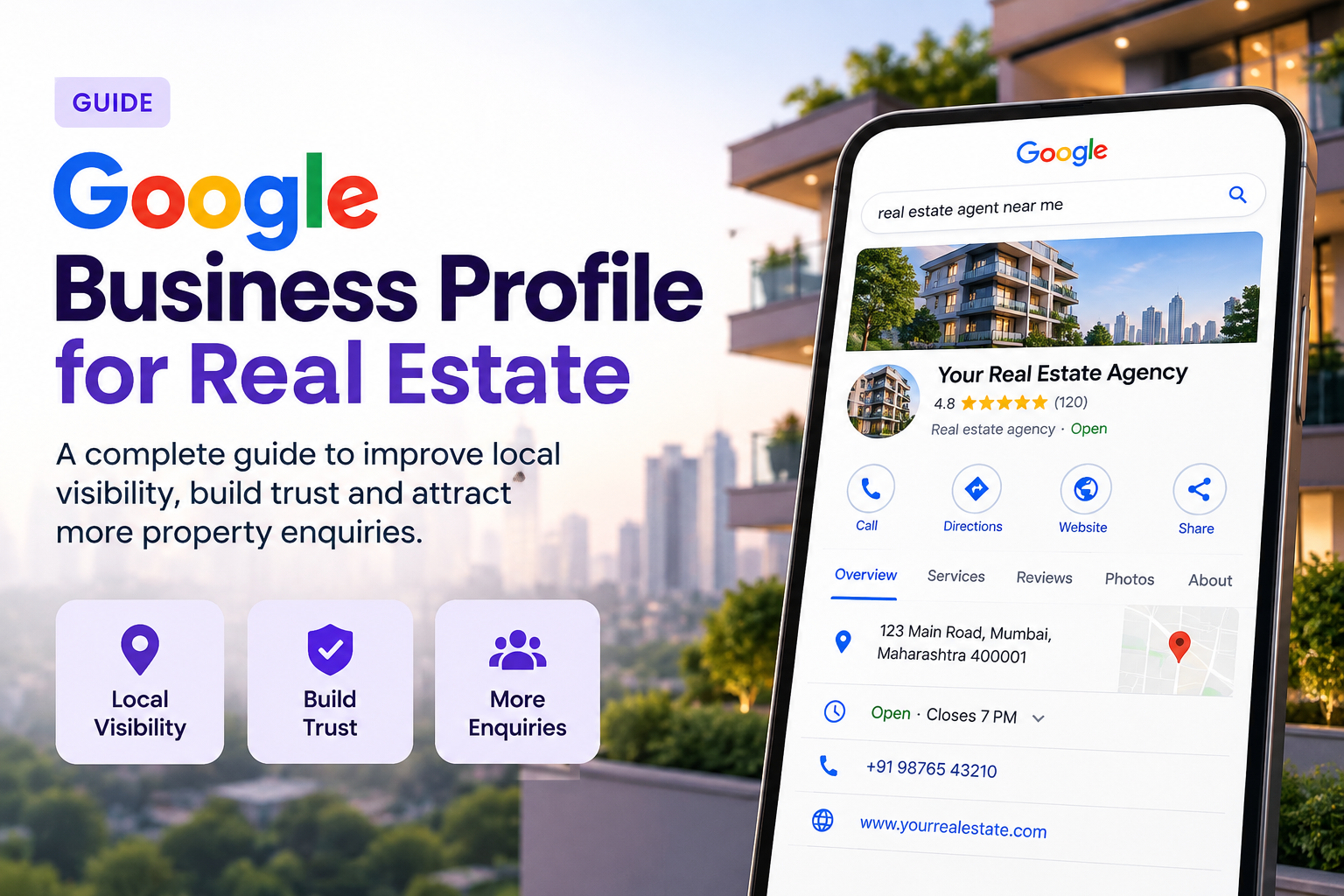
Optimising Your Google Business Profile for Real Estate Most home buyers start their search online. They type “real estate agent near me” and look at the top three results. Those results come from Google Business Profile. If your profile is weak, you lose leads before they ever visit your website. A strong Google Business Profile real estate setup builds trust fast. It shows your office, your reviews, your listings and your phone number in one place. This guide explains each step in simple terms, so you can act on it today. Why Your Profile Matters So Much Google shows local results in a map box above normal search results. This box gets a large share of clicks. People can call you, get directions or read reviews without leaving the page. A complete profile will help Google trust your business. Google wants to ensure that it is showing real and accurate businesses. Having up-to-date information will help you rank higher in local searches so you get more calls and site visits. Step 1: Claim and Verify Your Profile Start by searching for your business name on Google. If a profile already exists, claim it. If not, create a new one at the Google Business Profile website. Google will ask you to verify your business. You may get a postcard, a phone call, an email or a video check. Choose the method offered and finish it quickly. Until you verify, your profile stays hidden from most searchers. Use your real business name. Do not add extra words such as “Best Realtor in Mumbai”. Google may suspend profiles that stuff keywords into the name. Step 2: Pick the Right Categories Your main category tells Google what you do. For most agents, “Real estate agency” works best. You can also add up to nine extra categories. Good options include: Real estate consultant Property management company Real estate developer Commercial real estate agency Apartment rental agency Pick only the ones that match your services. Too many unrelated categories can confuse Google and weaken your ranking. Step 3: Fill In Every Detail Incomplete profiles lose to complete ones. Fill in each field with care. Check these items first: Profile Field What to Add Why It Helps Name Your exact business name Builds trust and avoids penalties Address Full office address Helps Google place you on the map Service areas Cities and neighbourhoods you cover Brings in searches from nearby areas Phone number One local number Makes calling easy Website Your main site or listings page Sends ready buyers to your offers Hours Regular and holiday hours Stops missed visits and bad reviews Keep your name, address and phone number the same everywhere online. Match your website, social pages and directory listings. Mixed details make Google doubt your business. Step 4: Write a Clear Business Description You get 750 characters for your description. Use them well. Tell people who you are, what you sell and where you work. Mention your years of experience and your main property types. Here is a simple example. “We help families buy, sell and rent homes in Virar, Vasai and Palghar. Our team has ten years of local experience. We handle flats, villas and plots with honest advice and clear pricing.” Add your main keywords in a natural way. Do not repeat them again and again. Write for people first and search engines second. Step 5: Add Strong Photos and Videos Photos are the first thing buyers notice. Profiles with many photos get more calls and direction requests. Upload clear, bright images often. Add these types: Your office front and inside Your team at work Your best property shots Local landmarks and neighbourhoods Short walkthrough videos of listings Avoid blurry or dark pictures. Use your phone in good daylight if you do not have a camera. Add new photos each week to show your profile is active. Step 6: Show Your Services and Listings Use the Services section to list what you offer. Include buying, selling, renting, valuation and property management. Write a short line under each one. Explain what the client gets and how you help. The Products section can show featured properties. Add a photo, a price range and a link to the full listing. This turns your profile into a small shop window for your best homes. Step 7: Collect and Answer Reviews Reviews are the biggest trust signal in real estate. Buyers spend a lot of money and want proof you are reliable. Ask every happy client for a review right after the deal closes. Make it easy. Send your review link by text or email. Keep your request short and polite. Never pay for reviews or write fake ones. Google can remove them and punish your profile. Reply to every review. Thank people who praise you and mention a detail from their deal. For bad reviews, stay calm. Say sorry, offer a fix and move the chat offline. Future buyers read your replies, so a kind tone wins them over. Step 8: Post Updates Every Week Google lets you share posts on your profile. Use them to show new listings, open house dates, market tips and offers. Each post stays visible for a short time, so post often. Try this simple weekly plan: Monday: share a new listing Wednesday: post a market tip or price update Friday: announce a weekend open house Add a clear button such as “Call now” or “Learn more”. Use a real photo with each post. This keeps your profile fresh and gives people a reason to act. Step 9: Use Questions and Messages The Q&A section lets people ask you things in public. Add your own common questions and answers first. Cover topics like fees, documents and viewing times. This saves time and shows you know your work. Turn on messaging if you can reply within a few hours. Slow replies hurt your image. If you cannot reply fast, keep messaging off. Step 10: Track Your Results Google gives you insights
10 Lead Magnets for Real Estate Agents
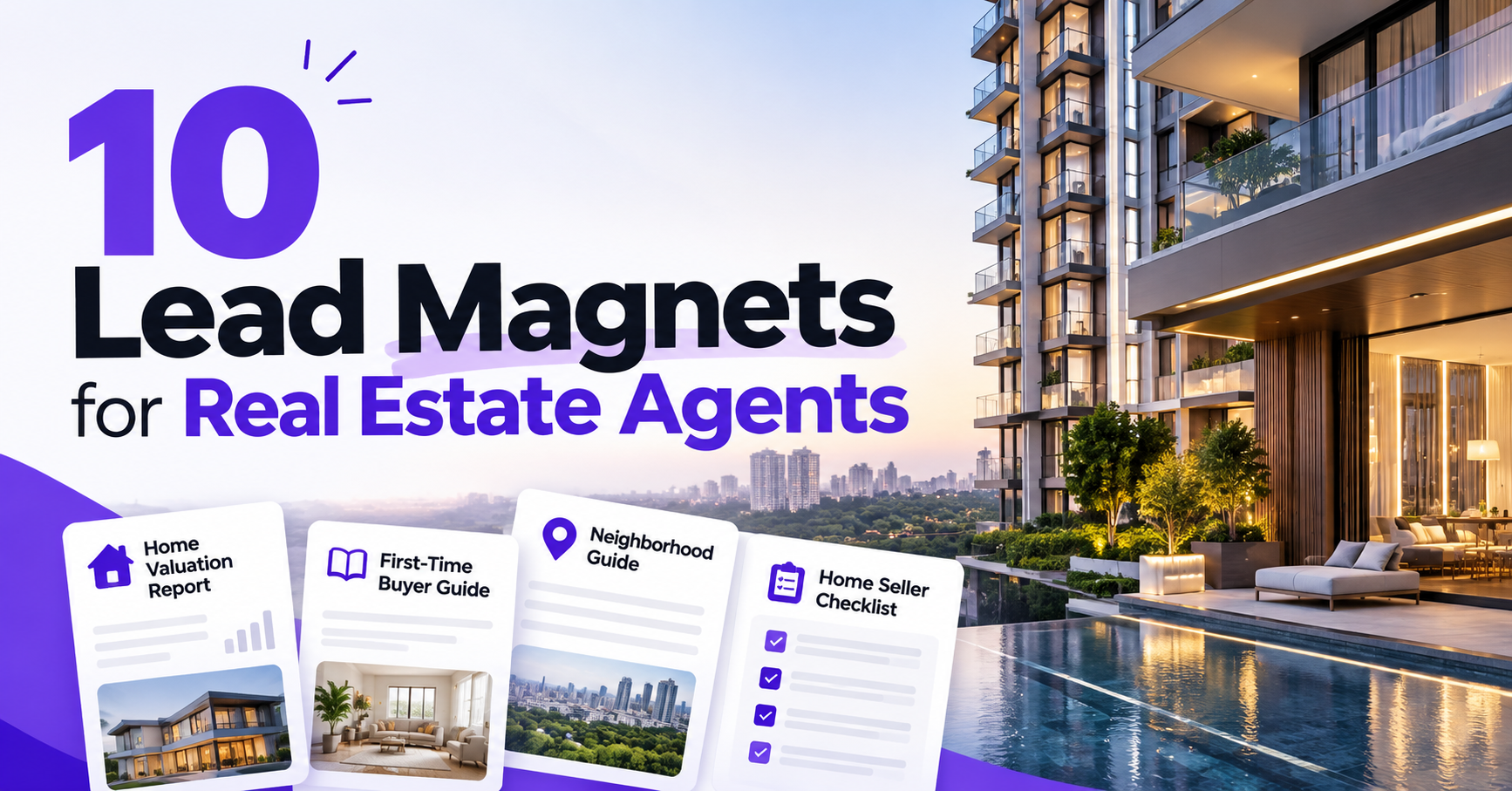
10 Lead Magnets for Real Estate Agents Simple, free offers that help agents attract buyers and sellers, build trust, and grow their client list. Real estate agents need a steady flow of new leads. Many still wait for the phone to ring. A better way exists. Real estate lead magnets give people something useful for free. In return, people share their name and contact details. This blog lists ten proven lead magnets that agents can start using this week. What Is a Lead Magnet? A lead magnet is a free gift that solves one small problem. It can be a guide, a checklist, a report, or a tool. The visitor gets quick help. You get their name and email in return. Good lead magnets share a few traits: They are short and easy to read. They solve one clear problem. They show that you know your local market. They ask for very little in return. The 10 Lead Magnets Turn every property enquiry into a meaningful buyer conversation with the right lead magnet. 1. Free Home Valuation Report Almost every homeowner wants to know what their home is worth. That makes this one of the strongest real estate lead magnets. Add a simple form to your website. The owner types in an address and an email. You then send a clear price estimate. This offer attracts sellers early, often before they call anyone else. It also gives you a natural reason to start a real talk about their plans. 2. First-Time Buyer Guide First-time buyers feel nervous and have many questions. A simple guide can calm those fears. Cover how to save for a down payment, how to get a loan, and how to make an offer. Explain closing costs in plain words. Share it as a short PDF. Buyers who read it will remember who helped them. Many will call you when they are ready to start looking. 3. Neighborhood Guide Buyers often pick an area before they pick a house. A neighborhood guide helps them decide. List schools, parks, shops, and travel times. Add average home prices and a few fun local spots. Make one guide for each area you serve. Each guide can also bring in search traffic. People who search for “living in” your town may find you first. 4. Home Seller Checklist Selling a home feels like a big job. A checklist breaks it into small steps. Cover repairs, cleaning, photos, showings, and paperwork. Sort the list by time, such as “six weeks before listing.” Sellers love a clear plan. They also trust the agent who gave it to them. When the time comes to list, they will remember your name. 5. Mortgage Calculator People like tools they can use right away. A mortgage calculator shows the monthly payment for any price and loan term. Buyers can try different numbers and see what they can afford. Ask for an email so you can send the results. This lead magnet draws serious buyers. They already think about budgets, and that makes them ready to talk. 6. Local Market Report Prices and sales change each month. A short market report shows what is happening nearby. Include average prices, days on the market, and the number of homes sold. Add a few lines that explain what the numbers mean. Buyers and sellers both want that insight. You can also send a fresh report each month. That keeps your name in front of them. 7. Free Webinar or Workshop A live or recorded session lets people meet you. Topics can include “How to Buy Your First Home” or “How to Price Your Home Right.” Keep each session to 30 or 45 minutes. Guests sign up with their name and email. After the session, you can answer questions. This builds trust faster than any written guide. People see your face, hear your voice, and judge your skill. 8. Home Staging Tips Sheet Staged homes often sell faster and for more money. Many sellers do not know where to start. A one-page tips sheet can help. Cover decluttering, paint colors, lighting, and curb appeal. Add before-and-after photos to make the tips clear. Sellers get ideas they can use this weekend. You look like an expert who cares about results. 9. Moving Checklist Moving means many tasks. People forget to switch utilities, change their address, or book movers. A moving checklist fixes that. List tasks by time, such as “four weeks before” and “moving day.” Both buyers and sellers need it. Send it after an offer is accepted. You can also post it on social media to attract new contacts. 10. Exclusive Listing Alerts Some buyers want to see homes before anyone else. Offer early access to new listings. The buyer signs up with a few details, such as budget and area. You send alerts by email or text. This works well because it matches the buyer’s goal. It also tells you exactly what each buyer wants. That makes your follow-up calls much easier. Quick Comparison Lead Magnet Best For Common Format Effort to Create Home Valuation Report Sellers Web form + email Medium First-Time Buyer Guide Buyers PDF Medium Neighborhood Guide Buyers PDF or web page Medium Home Seller Checklist Sellers PDF Low Mortgage Calculator Buyers Web tool Medium Local Market Report Both PDF or email Medium Free Webinar Both Live or recorded video High Home Staging Tips Sheet Sellers One-page PDF Low Moving Checklist Both PDF Low Exclusive Listing Alerts Buyers Email or text Low How to Pick the Right Offer You do not need all ten at once. Start with one offer for buyers and one for sellers. Then add more as you learn what works. Keep these rules in mind: Solve one problem. A focused offer beats a long, general guide. Match your audience. Use a valuation report for sellers and a guide for new buyers. Keep it short. Most people will not read a 40-page file. Make it look clean. Use clear headings, local photos, and
How CRM Integration Improves Real Estate Sales
How CRM Integration Improves Real Estate Sales A closer look at why real estate teams are turning to CRM tools to close more deals, save time, and build better client relationships. Buyers don’t like waiting. Sellers want updates constantly. And most agents? They’re juggling a dozen leads at once, often on nothing more than sticky notes and memory. That’s the gap CRM integration fills. Instead of five scattered tools, agents get one place to manage every contact, call, and deal. More firms are treating their CRM as everyday sales work now, not a side tool nobody opens. Below, we walk through what CRM integration actually means for real estate, then break down each benefit so agents, brokers, and agency owners can see the full picture for themselves. What Is CRM Integration in Real Estate? CRM stands for Customer Relationship Management. Simply put, it’s software that stores client details, tracks conversations, and manages follow-ups. Integration means hooking that software up to the tools agents already use daily: email, phone systems, websites, social media. Once these systems start sharing data, an agent can pull up a client’s full history in one screen, past messages, property preferences, where the lead stands right now. Nothing falls through the cracks between apps and spreadsheets. And that alone saves hours every week. Why Real Estate Sales Teams Need CRM Integration A single deal has more moving parts than most people assume. Property visits. Price talks. Paperwork. Follow-up calls. Miss one update, and the whole thing can unravel. Without a system tracking it all, agents forget calls or drop promises they made weeks ago. One missed follow-up is sometimes all it takes to lose a sale. A solid CRM handles this quietly in the background. Reminders go out on their own. Every interaction gets logged. Leads that need attention get flagged before they go cold. Less digging through old emails, more time actually talking to people. That shift, from paperwork to people, explains why so many teams now build their whole day around a CRM. Key Benefits of CRM Integration for Real Estate Sales Here’s where CRM integration actually moves the needle for real estate teams. 1. Better Lead Management Leads pour in from everywhere, property portals, social ads, referrals, walk-ins off the street. Without one system tying it together, they end up scattered across inboxes, notebooks, and half-remembered phone contacts. Some just get lost. A connected CRM pulls every lead into one dashboard. Agents sort by location, budget, or interest, and see at a glance which leads are close to closing and which need more nurturing. It’s a clearer view, and it means agents spend their energy where it actually counts. 2. Faster Response Times Buyers expect fast answers. A slow reply can push someone straight to a competitor down the street. Research backs this up, too: agents who respond within minutes close noticeably more deals than agents who take hours. CRM tools push instant alerts the second a new lead comes in. Agents reply from inside the same platform, no jumping between five different apps mid-conversation. That speed builds trust quickly, and it keeps momentum going instead of letting a lead go cold overnight. 3. Personalized Client Communication Nobody wants a message that reads like it was copy-pasted to a hundred other people. Buyers want to feel like someone actually gets what they’re after. A CRM keeps track of property type, budget, and preferred location for each client, individually. With that on file, agents can send messages that actually fit the person on the other end. Some CRMs even auto-send new listings matching a buyer’s saved preferences, no manual work required. It’s a small thing, but it makes clients feel like more than just another name on a list, and clients who feel valued tend to buy. 4. Improved Team Collaboration Most deals involve more than one person: a listing agent, a buyer’s agent, sometimes a manager checking in. Without shared records, updates get lost between people, and everyone ends up asking the same question twice. CRM integration puts the whole team on the same page, literally. Notes, call logs, next steps, all sitting in one shared file anyone on the team can pull up. Less confusion. Fewer repeated conversations. Everyone rowing in the same direction. 5. Automated Follow-Ups A lot of sales die for one simple reason: nobody followed up. Agents get busy. Leads slip quietly out the door. CRM tools close that gap with automated reminders and follow-up messages that don’t forget, ever. A CRM might send a thank-you note right after a property showing, then nudge the agent to call that same lead three days later. Small, steady touches like these keep buyers engaged right up until they’re ready to say yes. 6. Clear Sales Reports and Insights Every agency needs to know what’s actually working and what isn’t. CRM integration tracks lead sources, response times, and closed deals, then turns that raw data into reports owners and managers can actually understand at a glance. With real numbers in hand, agencies see which marketing channels bring in the strongest leads. They can also spot which agents might need a bit more coaching. It’s insight built on data, not guesswork, and that changes how decisions get made. CRM Integration and Marketing: A Strong Match Sales and marketing work best when they’re pulling from the same data. A connected CRM links directly to marketing campaigns, so leads from ads, emails, and social posts land straight in the sales pipeline, no manual copying involved. This is exactly why many firms bring in a real estate marketing agency to build and manage that connection properly. A skilled real estate marketing agency knows how to tie ad campaigns to CRM data so leads don’t fall through the cracks between departments. Picking the right marketing agency for real estate also means getting more out of that CRM data down the line. A strong marketing agency for real estate studies past client behavior to build ads that reach
7 Meta Ad Creatives That Sell More Properties
7 Meta Ad Creatives That Sell More Properties Nobody buys a house off a signboard anymore. Most buyers scroll through Facebook or Instagram first, long before they call an agent or book a site visit. That’s exactly why a good real estate marketing agency puts real thought into Meta ads instead of treating them as an afterthought. A well-made creative can stop someone mid-scroll, earn their trust, and push them toward booking a visit. Here are seven Real Estate Ad Creatives that we’ve seen work again and again for property sellers. 1. Video Walkthroughs That Feel Like a Real Visit A video walkthrough does something photos simply can’t. It lets buyers feel the space, the light, the flow from one room to the next. People believe what they see move far more than a still image. Keep it under 60 seconds, and always add captions since most people scroll with the sound off. One small trick: open with the best room, not the front door. Save the entrance for later. Close with a simple line like “Book a visit today” so viewers know exactly what to do next. 2. Before and After Renovation Shots If a property got a makeover, don’t hide it. Put the old photo and the new one side by side and let buyers see the difference for themselves. It builds trust fast, because people are naturally a bit sceptical of resale listings. This works really well for older flats that got new flooring, fresh paint, or an updated kitchen. Just make sure both photos are shot in similar lighting, or the comparison won’t land the way it should. A short caption like “Renovated in 2025” is usually enough. 3. Carousel Ads With Room-by-Room Details One photo rarely tells the full story of a home, especially a larger one. Carousel ads solve that problem by letting buyers swipe through room after room at their own pace. Show the living room, then the kitchen, then maybe the balcony view. Label each slide simply, something like “Master Bedroom” or “Balcony with Garden View.” It sounds basic, but this small labeling step is what actually helps buyers picture the layout instead of getting lost between photos. 4. Drone Shots for Location and Surroundings A house is only half the story. Where it sits matters just as much, sometimes more. Drone shots pull back and show the roads, the parks, the whole neighborhood in one frame. Buyers get an instant sense of distance and convenience without reading a single paragraph. This creative shines for villas, gated communities, or any project with a rooftop pool or open plot worth showing off from above. 5. Customer Testimonial Clips A happy customer talking on camera, for even thirty seconds, can outweigh ten polished property photos. There’s a reason for that: real people trust other real people more than they trust an ad. Keep it unscripted and a little rough around the edges; that’s actually what makes it believable. Ask the buyer what they liked most, whether it’s the location, the price, or how the deal was handled. This one lands best mid-funnel, when someone is comparing a few options and looking for a reason to pick yours. 6. Price and EMI Breakdown Graphics A lot of buyers don’t walk away because they dislike the property. They walk away because the numbers feel unclear. A simple graphic with the price, down payment, and EMI laid out plainly removes that hesitation early on. No clutter, no small print, just large readable figures. This works especially well for first-time buyers still figuring out how home loans actually work. It also does a nice job of filtering out casual browsers from people who are genuinely ready to buy. Ad Creative Best For Key Goal Video Walkthrough New launches, resale homes Build trust through visual proof Before and After Shots Renovated properties Show real value added Carousel Ads Large homes, villas Highlight every room clearly Drone Shots Premium projects, gated communities Showcase the location Testimonial Clips Mid-funnel buyers Build genuine social proof Price and EMI Graphics First-time buyers Remove pricing confusion Local Landmark Ads Family buyers Show daily convenience 7. Local Landmark and Convenience Ads People aren’t just buying four walls. They’re buying the school run, the Sunday grocery trip, the hospital ten minutes away. A creative built around nearby landmarks, schools, malls, metro stations, speaks directly to that concern. A simple map graphic or a short list with distances works better than you’d expect. Keep the wording direct: “5 minutes from City Hospital” says more than a paragraph about “unmatched connectivity” ever could. Why These Creatives Work Together No single creative does all the heavy lifting on its own. Buyers scroll past dozens of ads before one actually earns a click. That’s why mixing these seven formats keeps a campaign feeling fresh instead of repetitive. Video sparks interest, testimonials build confidence, and a clean price graphic often seals the decision. A good real estate marketing agency doesn’t throw all of this at buyers at once. They sequence it, so the buyer moves naturally from curiosity to a booked site visit. A Few Practical Tips Before You Launch Shoot in natural daylight wherever possible; it just looks more real Keep any text on the image short, under ten words a line Every single creative needs a clear call to action, no exceptions Run two versions of the same ad and see which one actually performs better Refresh your creatives every few weeks, since repeat viewers tune out stale ads fast Final Thoughts There’s no single trick to selling property through Meta ads. It comes down to showing the right creative to the right person at the right moment. Video builds trust, testimonials add confidence, and clear pricing clears up doubt before it even forms. Together, these seven Real Estate Ad Creatives cover nearly every step a buyer takes before deciding. Any real estate marketing agency that sticks with this mix will start seeing faster inquiries and more site
Lead Forms vs Landing Pages – Which Converts Better?
Lead Forms vs Landing Pages – Which Converts Better? Ask ten marketers this question and you’ll get ten different answers, mostly because the right answer depends on what you’re selling, not on which format is “better” in some abstract sense. A lead form and a landing page both exist to capture contact details, but the mechanics behind them are different enough that they pull completely different numbers on cost per lead, form fill rate, and lead quality. Get the choice wrong for your offer, and the damage shows up two or three steps downstream, when sales is stuck qualifying a pile of contacts who were never going to buy. This blog will explain how each format actually works, what the data tends to show, and where a real estate marketing agency, or any business selling something with a long sales cycle, should draw the line between the two. The goal isn’t to crown a winner. It’s to help you match the format to the offer, so your cost per acquisition reflects the quality of leads you’re actually getting, not just the volume. How Lead Forms Actually Work A lead form lives inside the platform itself, usually Meta or LinkedIn. The prospect sees an ad, taps it, and a form opens without ever leaving the app. Because the platform already has the user’s name, email, and phone number on file, most fields auto-populate. The person just confirms and submits. From click to conversion, the whole thing can take under ten seconds. That speed is the entire value proposition. Mobile users abandon forms constantly, not because they lack interest, but because typing an email address on a five-inch screen while riding a train is genuinely annoying. Lead forms remove that friction almost completely, which is why form fill rates on this format often run noticeably higher than on an external landing page for the same offer. But there’s a mechanical trade-off baked into that convenience: the platform, not you, controls the environment. You can’t add a video walkthrough, a comparison table, or three client testimonials inside a native lead form. You get a headline, a short description, a few custom questions if the platform allows it, and that’s roughly it. So the format works best when the offer doesn’t need much persuading, things like a downloadable price guide, a free valuation, or a webinar sign-up. Ask for a ₹50 lakh service commitment through a native lead form, and you’ll usually see the fill rate stay decent while the actual lead quality falls off a cliff, because the format never gave the prospect a reason to take the offer seriously. How Landing Pages Actually Work A landing page is a page you build and host yourself, designed around a single conversion goal. When someone clicks the ad, they leave the platform and land on a page you control completely, which means you can build the entire case for your offer before you ever ask for contact details. This matters more than people give it credit for. A landing page can hold a headline that speaks directly to the visitor’s problem, a short video, a handful of testimonials from people who bought the exact thing being advertised, a comparison of before-and-after outcomes, an FAQ section that kills off common objections, and only then, a form. Every one of those elements does a small piece of the persuasion work before the visitor commits to anything. That’s why landing pages tend to out-convert lead forms on offers with real financial or reputational risk attached, the kind where a prospect wants proof before they’ll hand over their phone number. The cost of that persuasion is friction. Loading an external page takes time, even if it’s under two seconds, and every extra second measurably increases the chance someone bounces before the page even finishes rendering. You’re also asking the visitor to manually type their details rather than tap a pre-filled confirmation, which knocks a real percentage of people out of the funnel who would’ve completed a native form. The upside is that the people who do convert have usually read something, seen some proof, and decided the offer is worth their time. That shows up later as a better lead-to-appointment ratio and a shorter sales cycle for whoever ends up working the lead. Quick Comparison Metric Lead Forms Landing Pages Typical form fill rate Higher, often well above external forms Lower, drops with each added field Cost per lead Usually lower Usually higher Lead quality Mixed, more low-intent submissions Stronger, more pre-qualified Persuasion content available Minimal, platform-limited Full control: video, proof, FAQs Load time and bounce risk None, stays in-app Present, even if small A/B testing depth Limited to headline and image Full page, layout, and offer testing Best fit Low-commitment, top-of-funnel offers High-commitment, considered purchases The table looks balanced, and it should, because neither format is objectively stronger. A free downloadable guide and a ₹4 crore property listing are not the same offer, and treating them the same way at the top of the funnel is where a lot of wasted ad spend comes from. Where the Trade-Offs Actually Bite The lead form problem isn’t the format itself, it’s what happens after someone submits. Because the barrier to entry is so low, a chunk of every batch of leads will be people who tapped through out of curiosity, not intent. Sales teams end up building lead scoring models just to sort real prospects from noise, which is extra overhead that a landing page’s built-in friction partially handles for free. That said, for anything low-ticket, list-building, or brand awareness focused, this trade-off barely matters, since the offer never needed heavy convincing to begin with. The landing page problem is the opposite: real people bounce before they ever see your proof. A slow-loading page, a form asking for too many fields, or a headline that doesn’t match the ad copy can tank conversion rate even when the underlying offer is strong. This is exactly why serious
Why Your Cost Per Lead is Increasing & How to Reduce It
Why Your Cost Per Lead is Increasing & How to Reduce It Of all the factors agents overlook, targeting is usually the biggest one, and fixing it often brings the fastest results. Broad targeting wastes money by showing your ad to people who will never buy or sell anything. Narrow targeting, by contrast, costs less overall because it reaches fewer people who are actually a strong match. This idea matters even more in luxury real estate marketing, where the wrong message can quietly waste a large budget. A luxury buyer simply does not respond the same way a first-time buyer does, so the same ad rarely works for both. Instead, they want to see exclusive listings, private tours, and high-end photography that reflects the properties they are considering. Once ads are built specifically for this audience, wasted spend tends to drop noticeably. Beyond targeting the right people, it also pays to track exactly where your best leads are coming from. Some channels consistently bring in strong leads at a low cost, while others bring in plenty of leads that rarely convert. By tracking this data closely, you can shift your budget toward the channels that actually work. Why Your Cost Per Lead is Increasing & How to Reduce It Of all the factors agents overlook, targeting is usually the biggest one, and fixing it often brings the fastest results. Broad targeting wastes money by showing your ad to people who will never buy or sell anything. Narrow targeting, by contrast, costs less overall because it reaches fewer people who are actually a strong match. This idea matters even more in luxury real estate marketing, where the wrong message can quietly waste a large budget. A luxury buyer simply does not respond the same way a first-time buyer does, so the same ad rarely works for both. Instead, they want to see exclusive listings, private tours, and high-end photography that reflects the properties they are considering. Once ads are built specifically for this audience, wasted spend tends to drop noticeably. Beyond targeting the right people, it also pays to track exactly where your best leads are coming from. Some channels consistently bring in strong leads at a low cost, while others bring in plenty of leads that rarely convert. By tracking this data closely, you can shift your budget toward the channels that actually work. Why Your Cost Per Lead is Increasing & How to Reduce It Of all the factors agents overlook, targeting is usually the biggest one, and fixing it often brings the fastest results. Broad targeting wastes money by showing your ad to people who will never buy or sell anything. Narrow targeting, by contrast, costs less overall because it reaches fewer people who are actually a strong match. This idea matters even more in luxury real estate marketing, where the wrong message can quietly waste a large budget. A luxury buyer simply does not respond the same way a first-time buyer does, so the same ad rarely works for both. Instead, they want to see exclusive listings, private tours, and high-end photography that reflects the properties they are considering. Once ads are built specifically for this audience, wasted spend tends to drop noticeably. Beyond targeting the right people, it also pays to track exactly where your best leads are coming from. Some channels consistently bring in strong leads at a low cost, while others bring in plenty of leads that rarely convert. By tracking this data closely, you can shift your budget toward the channels that actually work. Why Your Cost Per Lead is Increasing & How to Reduce It You spend more on ads every month, but the leads don’t come in the same way anymore. That gap between spend and results is one of the most common headaches for agents and brokers right now. Cost per lead keeps climbing, while the quality of those leads stays flat or even drops. Maybe you’ve noticed it too: the invoices go up, but your calendar of showings doesn’t. Many businesses, including those in luxury real estate marketing, are dealing with higher costs and weaker results at the same time. Here’s what’s driving that trend, and what you can actually do to fix it. This blog will walk you through the common causes first, then get into fixes you can start applying this week. The Rising Cost of Leads – What’s Happening Lead costs have gone up across almost every platform, and the pattern is easy to see once you look closely. Facebook, Google, and LinkedIn all charge more per click than they did just a few years ago, mainly because more agents are now bidding for the same audience. As more people compete for the same eyeballs, prices naturally get pushed higher for everyone involved. At the same time, buyers and sellers see far more ads today than ever before, so they scroll past most of them without a second glance. Put these two trends together, and agents end up paying more just to reach fewer people who actually respond. This pain is even sharper in the luxury market, where the audience is naturally much smaller to begin with. Luxury real estate marketing targets a select group of people with higher incomes, so there simply are not that many of them to go around. Because fewer people fit this audience, the competition for their attention becomes intense, and costs rise fast as a result. Agents who once paid ten dollars per lead now often pay thirty or more for the same result. This shift hits smaller agencies the hardest, since big brokerages can absorb the extra cost far more easily than a small team can. Common Reasons Behind the Increase To fix rising costs, it helps to understand exactly what is driving them, rather than guessing at the problem. Several clear factors tend to show up again and again, and most agents are dealing with more than one at the same time. Reason What It Means More
How Performance Marketing Generated 3,000+ Property Enquiries for Our Client
How Performance Marketing Generated 3,000+ Property Enquiries for Our Client A home is one of the biggest investments a person makes, which is why buyers don’t make decisions overnight. They research extensively, compare projects, and evaluate every detail before taking the next step. The real challenge isn’t driving traffic, it’s attracting genuine buyers who are ready to engage. This case study reveals how our Meta Ads strategy generated 3,000+ qualified enquiries for a real estate project and successfully turned many of them into high-quality site visits through data-driven performance marketing. About the Client Our client is a real estate developer that has a number of residential projects such as Mayfair, Amavi, AV Greenairy and Comfort Heritage. Every project was unique; from high-end residential to affordable. The client simply wanted to see more people interested in these homes and approaching them. They had experimented with ads in the past but got mixed results. Some campaigns were successful, others spent money without giving good returns. They wanted someone to bridge this gap and bring order to their ad spend. This is where our team came in. The Challenge Before we started, the client faced a few clear problems. Ad spend was not equally productive across projects Some campaigns had a high cost per enquiry There was no clear system to track which ad brought which lead The client did not know which project needed more budget and which needed less This is common when a business runs ads on its own without a marketing agency for real estate guiding the process. Ads need constant checking, fresh creatives, and budget shifts based on real data, not guesswork. Our Approach We built our plan around three simple ideas: keep it clear, keep it measured, and keep it moving. 1) Separate Campaigns for Each Project Instead of running one big campaign for all properties, we built a separate campaign for each project, so Mayfair got its own campaign and Amavi got its own too. This helped us track performance clearly and let us set different budgets for different projects, based on how well each one actually performed. 2) Mix of Lead Types We tested two types of ad actions: messaging conversations, where a person initiates a conversation directly from the ad and lead form ads, where a person completes a brief form with their name and number. Both methods work well for real estate, since messaging feels personal and fast, while forms suit people who prefer not to chat. 3) Constant Testing and Budget Shifts We did not set the budget once and leave it untouched. Instead, we checked results every week, and if a campaign gave a low cost per result, we gave it more budget. If a campaign became expensive, we paused it or changed the creative right away. This kept our spend efficient throughout the entire campaign period. Campaign Breakdown Here is a look at how a few of the key campaigns performed during the run: Campaign Name Status Results Cost Per Result Daily Budget Amount Spent Mayfair 3 X Socixmedia Active 354 conversations ₹163.64 ₹800.00 ₹57,927.32 Mayfair X Socixmedia Active 2,061 conversations ₹71.16 ₹1,000.00 ₹1,46,658.22 AV Greenairy X Socixmedia Active 756 conversations ₹77.75 ₹800.00 ₹58,780.37 As you can see, the Mayfair X Socixmedia campaign was the strongest performer. It gave over 2,000 conversations at a cost of just ₹71.16 per result. This campaign received the highest daily budget because it earned that trust through steady performance. Why Messaging Conversations Worked So Well Most of the enquiries came through messaging ads, not forms, and this makes sense for real estate buyers. They have many questions about price, location, and possession date, and a chat window lets them ask these questions right away. A form simply does not give them that same space to talk. We also made sure our team replied fast to every message, because speed matters here. If a person waits too long for a reply, they lose interest and move on to another project. Fast replies kept conversations active and helped turn casual chats into confirmed site visits. The Results Across all campaigns, the client crossed 3,000 property enquiries in total, combining messaging conversations and form leads. The cost per enquiry stayed well within a healthy range for most campaigns, especially the top performers like Mayfair and AV Greenairy. A few numbers stand out: Over 3,500 combined enquiries across active and paused campaigns Cost per messaging conversation as low as ₹71.16 on the best campaign Clear visibility into which project needed more spend and which needed a pause But the number that mattered most to the client was not the enquiry count. It was what happened after. Within two months, these enquiries turned into 90+ confirmed site visits. This is the point where an ad campaign truly proves its worth, since a site visit shows real buying interest, not just curiosity. It gave the client a full picture of their ad performance and let them make quick, confident decisions about where to put their next rupee. Key Lessons From This Campaign There are a few lessons any property brand can take from this case. Split campaigns by project. This gives clear data on what works. Use both messaging and form leads. Different buyers prefer different actions. Reply fast to messages. Speed keeps buyers interested. Review and shift budget often. Do not let a weak campaign eat your spend. Watch cost per result closely. It tells you where your money works hardest. Final Thoughts This case shows what happens when property marketing gets proper structure and daily attention. It is not about spending more money, but about spending it in the right place, at the right time, on the right project. For any developer looking for steady, measurable results, working with a skilled real estate marketing agency can turn ad spend into real conversations with real buyers. And when a marketing agency for real estate brings both strategy and daily discipline to the table, the results speak for themselves,
