
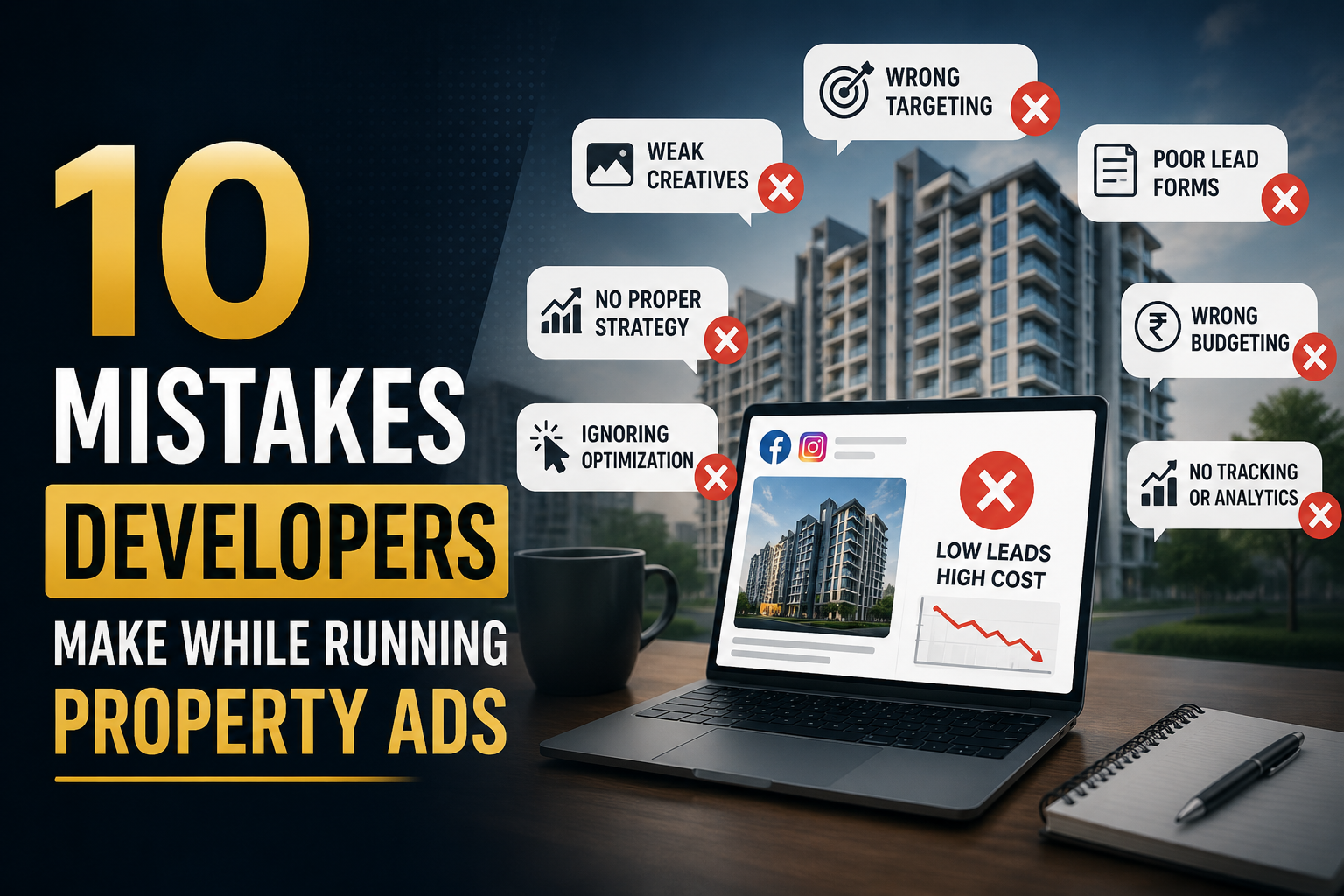
10 Mistakes Developers Make While Running Property Ads
Meta Ads have become one of the best ways to generate real estate leads. Every day, thousands of buyers scroll through Facebook and Instagram looking for their next home. That gives developers a great opportunity to reach the right audience.
But running ads doesn’t always guarantee results. Many developers spend a good amount on Meta Ads and still struggle with poor-quality leads. Some campaigns attract the wrong audience. Others become expensive without generating enough enquiries.
The good news is that most of these problems are caused by a few common mistakes. Fixing them doesn’t always require a bigger budget. It just requires a better strategy.
This blog will look at 10 common Meta Ads mistakes that cost real estate developers leads and money. More importantly, we’ll show you how to avoid them.
1. Targeting the Wrong Audience
A lot of developers set their ads to reach everyone in a city, which sounds like a good idea but rarely works out. Most of that spend goes toward people who were never going to buy a home in the first place. It works much better to narrow things down by income, age, and location, and to focus on people who have already searched for homes recently. This kind of targeting is one of the first things anyone doing digital marketing for real estate agents should get right. It usually means fewer clicks overall, but the clicks that do come in are from real buyers, and the cost per lead drops as a result.
2. Ignoring Mobile Users
Most people now scroll through property listings on their phones rather than sitting at a computer. Despite that, many developers still design their ads and landing pages with only desktop screens in mind.
On a phone, that same page can look broken, load slowly, or just feel awkward to use. Buyers notice this fast, and they leave within seconds if the experience feels off. Testing every ad and landing page on mobile first, before it ever goes live, fixes most of this. A page that works well on a phone tends to hold attention longer and builds more trust along the way.
3. Using Poor Quality Images
An ad can have the best copy in the world, but weak images will still sink it. Blurry photos or dark, poorly lit pictures make even a great project look cheap or unfinished. Buyers form an opinion about a property within the first few seconds of seeing it, long before they read a single word. Bright, clear, wide-angle shots go a long way toward changing that first impression. For larger projects, drone footage and short video walkthroughs tend to work especially well too. Strong visuals build interest before the buyer even gets to the text.
4. Writing Weak Ad Copy
Some ads pack in technical terms that mean very little to an everyday buyer. Words like FSI, carpet area, or RERA number can confuse someone buying their first home. Ad copy works best when it speaks plainly about what the buyer actually gets, mentioning location, price range, and a few key features in short, clear lines. Simple language consistently outperforms technical language in this space, mostly because it doesn’t ask the reader to work for it. Clear copy lets a buyer understand the offer in seconds, not minutes.
5. Not Testing Multiple Ad Versions
It’s common for a developer to build one ad and let it run for weeks without touching it again. The problem is that this approach never reveals what’s actually working with the audience. Running two or three versions side by side, even with small changes like a different photo or headline, often shows a big gap in performance.
Some of these tweaks alone can double the results from a single campaign. Testing should be a weekly habit, not something done once at the start and forgotten. Teams offering real estate digital marketing services build this kind of testing into every campaign, and it’s one habit that shouldn’t be skipped.
6. Sending Traffic to a Weak Landing Page
There are really three major keys to real estate performance marketing in 2026 – clarity, speed and data-driven decision-making. The buyer wants a speedy and honest response and not a sales pitch. Brands that watch their results closely and change course when something isn’t working tend to close more deals than those that don’t.
Whether you handle marketing in-house or bring in a trusted real estate marketing agency like us, the goal doesn’t really change. It’s about turning interest into real bookings, and making sure every rupee spent is actually earning its keep.
7. Ignoring Lead Follow-Up
Plenty of developers spend real money getting leads, then take too long to follow up on them. Someone who fills out a form expects a call within a few hours, not a few days. By the time a sales team calls two or three days later, that early interest has usually cooled off completely.
Setting up quick automatic replies through email or WhatsApp right after a form is submitted keeps that momentum alive. Fast follow-up turns far more leads into actual site visits and bookings, often more than any change to the ad budget would.
8. Not Tracking the Right Numbers
Some developers stop at checking how many people saw an ad, treating that number as the whole story. On its own, though, it says almost nothing about whether the ad is actually working. The numbers worth watching are cost per lead, cost per site visit, and cost per booking, since these show whether the spend is turning into real sales. Reviewing these figures weekly, and adjusting the ad plan based on them, keeps money from quietly draining into ads that aren’t pulling their weight.
9. Skipping Retargeting Ads
Very few buyers decide on a home the first time they see a listing. Most browse several projects before settling on one, which means a single visit rarely tells the whole story. Developers who skip retargeting often lose these buyers to whichever project shows up in front of them next. Retargeting simply puts the ad back in front of people who already visited the site or app, keeping the project fresh in their mind over the following weeks. It’s one of the simplest ways to bring back a buyer who almost said yes the first time.
10. Trying to Do It All In-House Without Expertise
Running property ads well takes real skill across design, writing, and data tracking, and that’s a lot to expect from one person. Many small and mid-size developers still try to hand all of it to a single junior staff member.
Over time, this usually shows up as wasted budget and results that never quite improve. Working with a team that offers real estate digital marketing services closes that gap fast, since these teams already know what works across many projects and cities. In the long run, it tends to save both time and money
Final Thoughts
Property ads aren’t just about spending money to get seen by as many people as possible. They’re about reaching the right buyer, with the right message, at the right moment. Developers who fix these ten mistakes tend to see lower costs and more bookings that actually stick. Strong ads, fast follow-up, and honest tracking all work together to make that happen. Any developer serious about growth should treat digital marketing for real estate agents as a core part of the sales plan, not an afterthought tacked on at the end.
